Jacks or Better is the most popular video poker game and serves as the foundation for nearly all other video poker variations. When played correctly, this game offers one of the best odds in the casino, with a return rate of up to 99.54%. Learning the right strategy can mean the difference between losing money and playing a near break-even game.
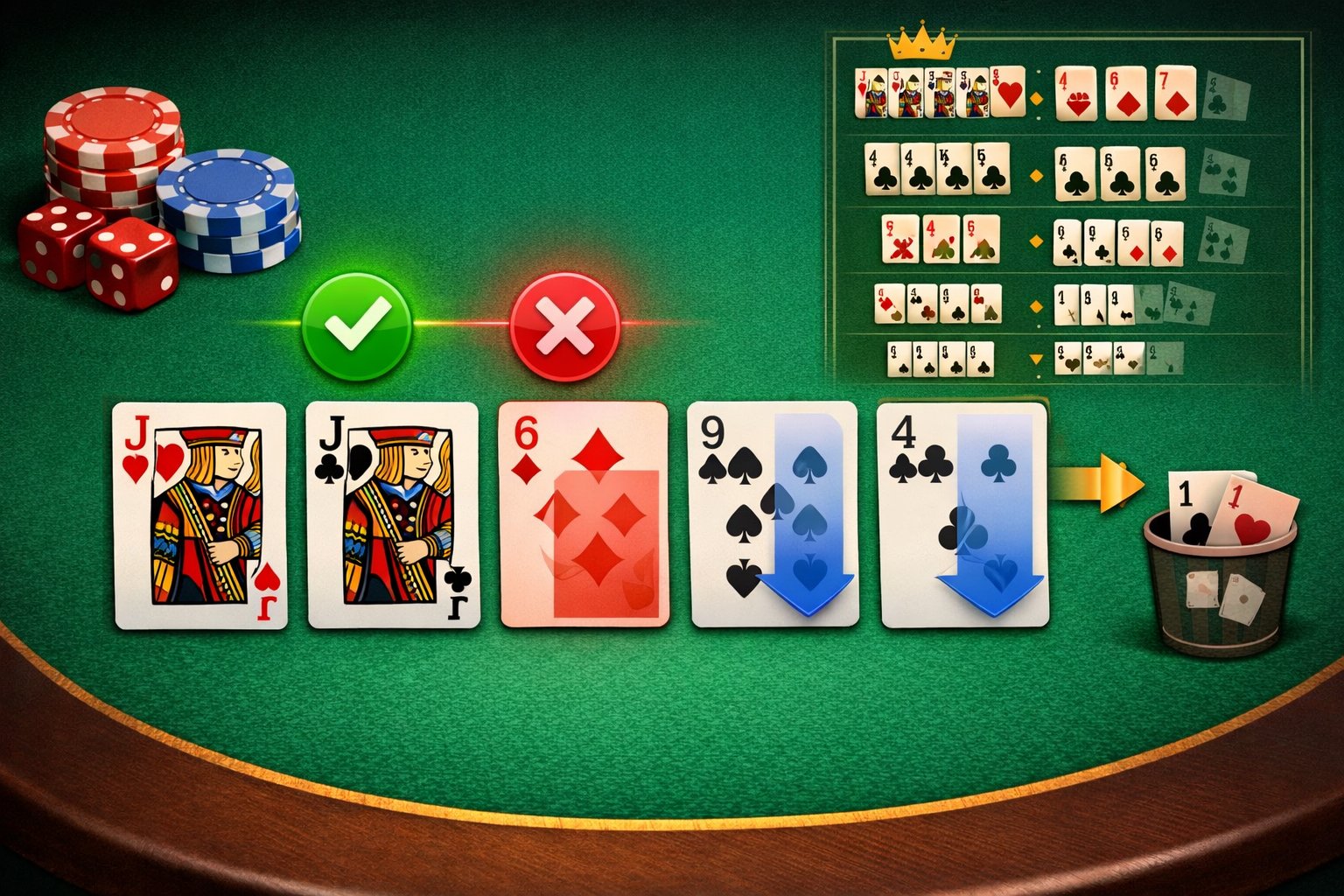
The key to winning at Jacks or Better is knowing exactly which cards to hold and which to discard in every situation, following a specific order of priority based on the expected value of each possible play. Unlike slot machines, video poker rewards skill and knowledge. You make decisions that directly affect your results.
This guide breaks down everything you need to know about Jacks or Better poker strategy. You’ll learn how the game works, which hands pay what amounts, and the exact strategy rules that maximize your returns. Whether you’re new to video poker or looking to refine your play, you’ll find clear answers about hand rankings, optimal decisions for every card combination, and tips for selecting the best games.
Understanding Jacks or Better Video Poker

Jacks or Better is the most common video poker game, combining poker hand rankings with slot machine-style gameplay. You’ll need to understand the basic rules, dealing process, and random number generation to play effectively.
Game Objective and Rules
Your goal in Jacks or Better is to create the best possible poker hand from five cards. You win when you make a pair of Jacks or higher.
The game uses standard poker hand rankings. A royal flush pays the most, followed by straight flush, four of a kind, full house, flush, straight, three of a kind, two pair, and finally a pair of Jacks or better.
You start each hand by placing a bet of 1 to 5 coins. The game deals you five cards. You can keep all five cards or discard any number of them. The game replaces your discarded cards with new ones. Your final five-card hand determines your payout based on the pay table.
How Hands Are Dealt and Played
When you press the deal button, the video poker machine displays five cards on screen. You review these cards and decide which ones to keep and which to discard.
You click or tap on cards to hold them. Most machines mark held cards with a “HELD” indicator. After selecting your holds, you press the draw button. The machine replaces all unheld cards with new ones from the deck.
The game evaluates your final hand automatically. If you have a qualifying hand (Jacks or better), you receive a payout based on the pay table and your bet size. You then start a new hand by placing another bet.
Role of RNGs in Video Poker
Random Number Generators (RNGs) determine which cards you receive in online video poker and electronic machines. The RNG constantly cycles through millions of number combinations per second, even when no one is playing.
When you press deal, the RNG stops at a specific moment and assigns cards based on that number sequence. This process ensures each card has an equal chance of appearing. The cards you discard go back into the virtual deck and cannot appear in your draw.
The RNG makes video poker fair and unpredictable. You cannot influence which cards appear through timing or patterns. Each hand is independent of previous hands.
Jacks or Better Hand Rankings and Payouts
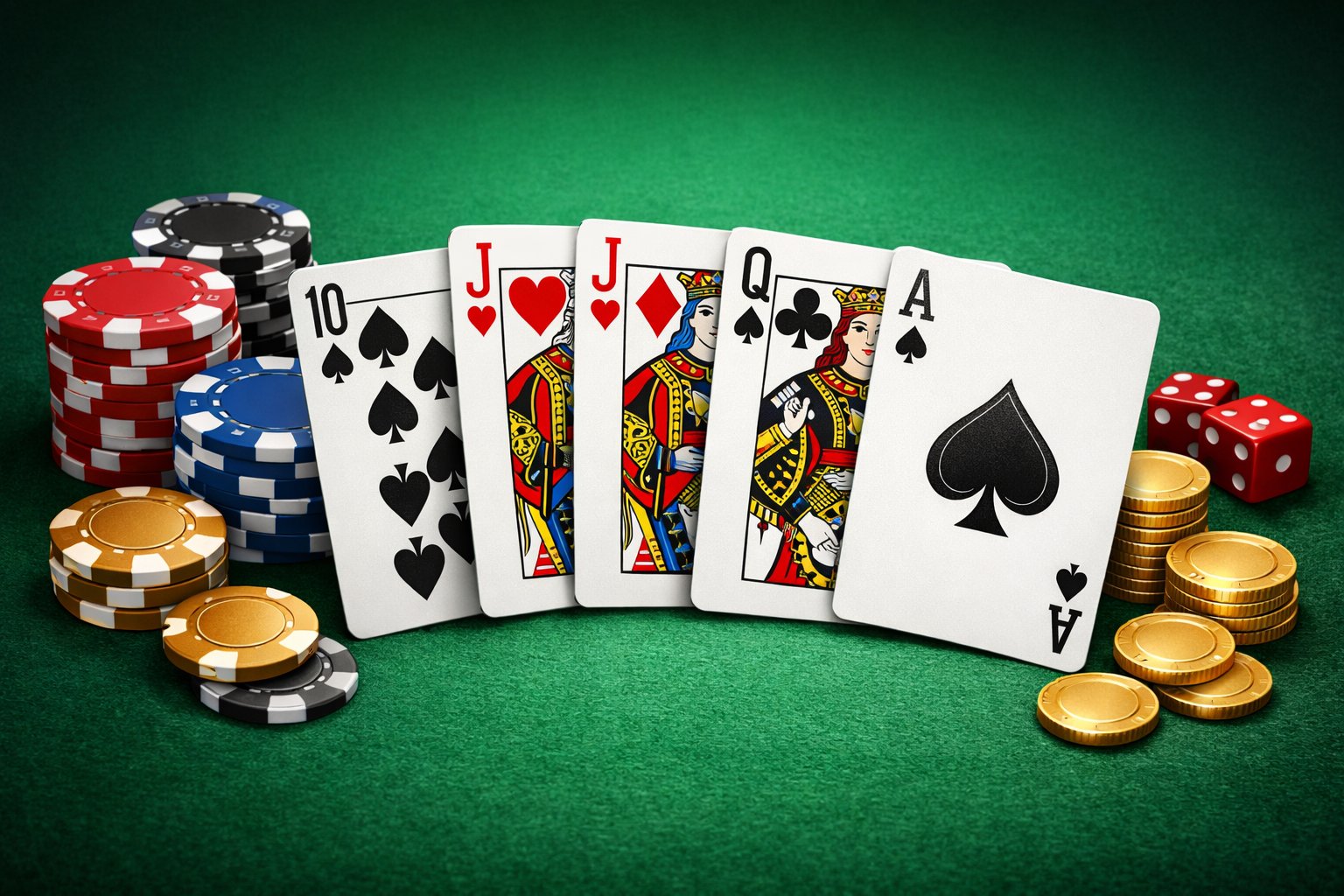
Understanding hand rankings and payouts is essential for playing Jacks or Better effectively. The game uses standard poker hand rankings with a minimum qualifying hand of a pair of jacks, and different paytables can significantly affect your returns.
Ranking of Winning Hands
The hand rankings in Jacks or Better follow traditional poker hierarchy. A royal flush (10-J-Q-K-A of the same suit) ranks highest, followed by a straight flush (five consecutive cards of the same suit). Four of a kind comes next, then a full house (three of a kind plus a pair).
A flush (five cards of the same suit) beats a straight (five consecutive cards of any suit). Three of a kind ranks above two pair, which beats a high pair. The minimum winning hand is a pair of jacks, which includes any pair of jacks, queens, kings, or aces.
Lower pairs (twos through tens) do not qualify for payouts in Jacks or Better. This distinguishes the game from other video poker variants and shapes your entire playing strategy.
Paytables and Payout Structures
The paytable displays how much each hand pays based on your bet amount. Payouts are typically shown per coin for a five-coin maximum bet. Different casinos offer different paytables, which directly affects your expected return.
The two most important numbers in any paytable are the payouts for a full house and a flush. These hands occur frequently enough to significantly impact your overall returns. A full house paying 9 coins and a flush paying 6 coins represents the best standard paytable available.
Lower paytables like 8/5 or 7/5 reduce your expected return substantially. Always check the paytable before playing, as it determines whether you’re getting fair odds or playing a game with poor returns.
Full Pay 9/6 Jacks or Better Explained
The term 9/6 Jacks or Better refers to a paytable that pays 9 coins for a full house and 6 coins for a flush. This is considered “full pay” because it offers the best standard returns. With optimal strategy, 9/6 Jacks or Better provides a 99.54% RTP (return to player).
Here’s the complete full pay paytable per coin:
| Hand | Payout |
|---|---|
| Royal Flush | 800 |
| Straight Flush | 50 |
| Four of a Kind | 25 |
| Full House | 9 |
| Flush | 6 |
| Straight | 4 |
| Three of a Kind | 3 |
| Two Pair | 2 |
| Jacks or Better | 1 |
The royal flush payout jumps to 4,000 coins when you bet the maximum five coins, making it essential to always bet max. This 99.54% return means that for every $100 wagered with perfect strategy, you can expect to get back $99.54 on average over time.
Essential Jacks or Better Strategy Fundamentals
Learning to play Jacks or Better correctly means understanding how each decision affects your expected return and knowing which cards to hold in every situation. The difference between random play and optimal strategy can mean the gap between losing money quickly and achieving a return near 99.54%.
Understanding Expected Value and Optimal Play
Expected value tells you the average return you’ll get from each decision over time. When you follow an optimal strategy in Jacks or Better, you’re choosing the play with the highest expected value for every hand you receive.
A full-pay 9/6 Jacks or Better machine returns 99.54% when you use optimal play. This means for every $100 you wager, you can expect to get back $99.54 on average. The “9/6” refers to the payouts: 9 coins for a full house and 6 coins for a flush per coin bet.
Using a strategy chart helps you achieve this optimal return. The chart ranks all possible plays from best to worst. You compare your hand against the chart and choose whichever option appears highest on the list.
Even small deviations from optimal strategy cost you money. A simplified strategy might return 99.46%, which seems close but costs you one bet every 1,178 hands compared to perfect play.
Basic Strategy Rules for Beginners
Your Jacks or Better basic strategy starts with recognizing what you already have versus what you could draw. Always keep paying hands like straights, flushes, and full houses unless you have four cards to a royal flush.
A high card means any Jack, Queen, King, or Ace. These matter because pairing them returns your bet. Low pairs (2s through 10s) rank below high pairs but still beat most drawing hands.
The strategy follows a specific hierarchy. Keep four cards to a royal flush over everything except a royal flush itself. Hold three of a kind over two pair, even though two pair already pays. Keep four cards to a straight flush over a high pair.
When you have multiple high cards, the rules change based on whether they’re suited. Two suited high cards beat a single high card. If you have three or more unsuited high cards, keep only the lowest two.
Key Concepts: Pairs, Draws, and High Cards
Pairs form the foundation of your strategy. A high pair (Jacks or better) ranks sixth on most strategy charts. A low pair ranks ninth, below four cards to a flush but above four cards to an outside straight.
Draw priority ranking:
- 4 to a royal flush – Second highest priority
- 4 to a straight flush – Keep over two pair
- 4 to a flush – Beats a low pair
- 4 to an outside straight – Ranks below low pairs
An outside straight has eight cards that complete it (like 7-8-9-10 needing a 6 or Jack). An inside straight has only four cards that work (like 6-7-9-10 needing only an 8). You’ll rarely hold inside straights because the odds don’t justify it.
Three cards to a royal flush rank seventh on the strategy chart. This beats four to a flush because the potential royal flush payout (800 coins) makes the lower probability worth it. You’ll discard paying hands for this draw only when the strategy chart tells you to hold the royal draw instead.
Understanding these fundamentals lets you use any Jacks or Better cheat sheet effectively. Your goal is to look at each hand, identify all possible holds, and pick the option that ranks highest.
Strategy by Hand Type: What to Hold and Discard
Making the right decision on which cards to hold and which to discard determines your success in Jacks or Better. Your strategy changes based on whether you have a made hand that already pays, a drawing hand that needs improvement, or just high cards with potential.
Made Hands: Pairs or Better
When you have a made hand, you need to know when to hold it and when to break it for a better opportunity. A high pair (jacks, queens, kings, or aces) always gets held because it returns your bet immediately. These hands rank 11th in the strategy hierarchy and return 1.54 units on average.
Low pairs (twos through tens) require more careful consideration. You hold a low pair in most situations, but you’ll break it when you have four to a flush or four to a royal flush. Low pairs rank 15th with a 0.82 return, while a four-card flush ranks higher at 13th with a 1.28 return.
Two pair ranks 10th in the strategy and returns 2.60 units. You always hold two pair and never draw to improve it.
Three of a kind ranks 7th and pays 4.30 units average. You never break three of a kind for any draw. Four of a kind ranks 3rd and pays 25 units, and you obviously hold all five cards.
Full house, straight flush, and royal flush are dealt hands you keep without drawing. The royal flush pays 800 units for five coins bet.
Drawing Hands: Flushes and Straights
Four to a royal flush ranks 4th in the optimal strategy with an 18.36 return. This draw beats everything except dealt made hands of four of a kind or better. You’ll sacrifice a high pair, low pair, three of a kind, or even a made flush or straight to chase the royal.
Four to a straight flush ranks 9th with a 3.53 return. You hold this draw over two pair, high pairs, and low pairs.
Four to a flush ranks 13th and returns 1.28 units. This beats a low pair, so you’ll discard your pair of eights to hold four suited cards. It loses to a high pair.
Four to an open-ended straight with zero to two high cards ranks 16th at 0.68 return. An inside straight with four high cards (like J-Q-K-A) ranks 19th at 0.60 return.
Three to a straight flush has three different types based on gaps and high cards. Type 1 (fewest gaps, most high cards) ranks 17th. Type 2 ranks 23rd. Type 3 (two gaps, no high cards) ranks 35th at 0.44 return.
Three to a royal flush ranks 12th at 1.29 return and beats four to a flush.
Dealing with High Cards: Single and Suited
When you don’t have a pair or strong draw, high cards become your best option. Suited high cards always rank higher than unsuited combinations because they give you flush possibilities.
Suited Q-J ranks 18th at 0.60 return. Suited K-Q and K-J rank 20th at 0.58. Suited A-K, A-Q, and A-J rank 21st at 0.57. Suited T-J ranks 26th, suited T-Q ranks 28th, and suited T-K ranks 31st.
Two unsuited high cards with king highest rank 27th at 0.49 return. Two unsuited high cards with ace highest rank 29th at 0.47.
The unsuited combinations T-J-Q-K and J-Q-K rank 14th and 24th respectively. These beat some suited high card combinations because they offer straight possibilities with multiple high cards.
A single high card ranks between 30th and 34th depending on the card. Jack ranks highest at 0.47, followed by queen at 0.47, king at 0.46, and ace at 0.46.
You discard everything (rank 36th at 0.36 return) only when you have no high cards, no pairs, and no reasonable draws.
Penalty Cards and Strategy Adjustments
Penalty cards are cards you discard that could have helped complete a different hand. These discarded cards slightly change the odds of certain plays and affect close strategy decisions.
A straight penalty card is a card that would help complete a straight. A flush penalty card is a suited card that reduces your chances of making a flush.
When you hold suited T-K versus just the king alone, you normally keep both cards. However, if you must discard a 9 and a flush penalty card, you should hold just the king. The discarded 9 reduces straight chances and the suited card reduces flush chances enough to tip the decision.
Four to a flush beats three to a royal flush in one specific case. When your royal draw includes a ten and ace, and the unsuited card is a 10 or straight penalty card, the four-card flush becomes the better play.
Suited J-Q loses to four to an inside straight when you have a 9 or flush penalty card in the discards. The penalties lower the suited J-Q value enough to make the inside straight draw superior.
Three to a straight flush (type 1, spread of 5, with one high card) beats four to an inside straight with three high cards only when there’s no straight penalty card. With a straight penalty, you hold the four to an inside straight instead.
You’ll rarely encounter these penalty card situations, but knowing them adds about 0.00002 to your overall return percentage.
Advanced Jacks or Better Strategy Tips
Mastering advanced play requires understanding how to handle tough decisions, using strategy charts correctly, and recognizing the errors that cost you money over time. These skills separate casual players from those who achieve the highest possible returns.
Optimal Play in Difficult Scenarios
The toughest decisions in Jacks or Better involve choosing between two seemingly valuable hands. When you hold four cards to a flush alongside a low pair, always keep the four-card flush draw. The expected value of completing a flush outweighs the low pair’s return.
If you have three cards to a royal flush with a high pair, keep the high pair. The exception is when all three royal cards are connected, like Q-K-A suited, but this rarely changes the math enough to matter.
When you hold four cards to a straight flush, discard everything else, even if it means breaking a high pair. The straight flush draw offers better long-term value. However, if you only have three cards to a straight flush with two high cards, keep just the high cards instead.
A suited 10-J-Q is stronger than holding just J-Q. Keep all three suited connectors because they give you multiple ways to win with straights, flushes, and royal flush possibilities.
Strategy Chart Usage and Interpretation
A strategy chart ranks all possible hand combinations from strongest to weakest. You compare your dealt hand against the chart and keep the highest-ranking combination listed. Start from the top of the chart and work down until you find a match.
Key Strategy Chart Rankings:
- Royal flush (keep all five cards)
- Four cards to a royal flush
- Straight flush, four of a kind, full house
- Three of a kind
- Four cards to a straight flush
- Two pair
- High pair (Jacks or better)
- Three cards to a royal flush
- Four cards to a flush
The best strategy charts are laminated for casino use or saved on your phone for quick reference. Study the chart before playing, focusing on the middle sections where most difficult decisions occur. The top and bottom are usually straightforward.
Common Mistakes to Avoid
Never break a paying hand to chase a long-shot draw unless you have four cards to a royal flush. Players often discard a low pair to hold three high cards, which reduces your expected return significantly.
Holding a single high card (kicker) alongside a pair is another costly error. If you have a pair of Jacks with an Ace, discard the Ace. The kicker doesn’t improve your odds of winning.
Many players hold three cards to a straight like 8-9-10 offsuit. This is wrong because the expected value is lower than holding just one or two high cards from that hand.
Avoid playing on machines that pay 8/5 or 6/5 instead of the full-pay 9/6 payout structure. The reduced payouts on full houses and flushes increase the house edge dramatically, making optimal strategy less effective.
Maximizing Returns: Game Selection and Bankroll
Your success in Jacks or Better depends heavily on selecting games with favorable pay tables and managing your bankroll effectively. The difference between a 9/6 paytable and lower-paying versions can cost you significant money over time, while proper bankroll management ensures you can weather the natural variance of video poker.
Choosing the Best Pay Tables and RTP
The Jacks or Better pay table you choose directly impacts your expected returns. A 9/6 paytable pays 9 coins for a Full House and 6 coins for a Flush per coin bet, offering a 99.54% RTP with optimal play. This is the standard you should look for.
Lower paytables like 8/5 or 7/5 significantly reduce your returns. An 8/5 table drops the RTP to approximately 97.3%, which means you lose more money per hour. A 6/5 table is even worse and should be avoided entirely.
Always check the paytable before you play. Online casinos typically display the pay table clearly on the game screen. Compare the payouts for Full House and Flush first, as these are the most common indicators of a game’s value.
Some casinos advertise “full pay” machines, which refers to the 9/6 paytable. These games give you the best mathematical chance of winning over time.
Betting Strategy and Max Coin Play
You should always bet the maximum number of coins (typically 5 coins) when playing Jacks or Better. The Royal Flush payout increases disproportionately when betting max coins, jumping from 250 to 1 up to 800 to 1.
This enhanced payout for a Royal Flush significantly affects the overall game RTP. Without betting max coins, you’re effectively reducing the 99.54% return to around 98.4%.
If your bankroll doesn’t support max coin bets at your current denomination, move down to a lower denomination instead of betting fewer coins. Playing quarters at max coins is better than playing dollars at one or two coins.
The math is straightforward: you need that 800 to 1 Royal Flush payout to achieve optimal returns. Without it, you’re giving up expected value on every hand you play.
Bankroll Management for Jacks or Better
Your bankroll should support at least 250 to 300 maximum bets to handle the game’s natural variance. If you’re playing $1.25 per hand (5 coins at 25 cents each), you need $312.50 to $375 as a starting bankroll.
Set both win and loss limits before you start playing. Decide how much you’re willing to lose in a session and stick to it. Similarly, determine a win goal where you’ll walk away with profits.
Video poker has variance built into its structure. You’ll experience losing streaks even with perfect play. A proper bankroll protects you from depleting your funds during these inevitable downswings.
Track your play sessions to understand your actual results versus expected returns. This helps you identify if you’re making strategy mistakes or simply experiencing normal variance.
Online Casinos and Video Poker Selection
Online casinos generally offer better pay tables than land-based casinos. You’re more likely to find 9/6 Jacks or Better games online, especially at reputable sites that cater to video poker players.
Online video poker also provides lower minimum bets, making it easier to bet max coins while staying within your bankroll limits. You can often find nickel or even penny denominations with full pay tables.
Many online casinos offer player rewards and bonuses that add value to your play. However, read the wagering requirements carefully, as video poker often contributes less toward bonus clearing than slots.
You can practice with free versions of Jacks or Better at most online casinos before risking real money. Use these free games to test your strategy and build confidence in your decision-making.
Frequently Asked Questions
New players often wonder about the best ways to hold cards, what payouts to expect, and how to avoid costly mistakes. Understanding these basics helps you play smarter and increase your chances of winning.
What are the fundamental playing strategies for beginners in Jacks or Better?
You should always hold premium made hands like royal flushes, straight flushes, four of a kind, and full houses without breaking them. These hands already give you strong returns.
Keep high pairs (jacks through aces) in most situations. Only break them when you have four cards to a royal flush.
Hold low pairs unless you can chase a straight flush or royal flush. Low pairs give you a decent foundation to build winning hands.
When you have three unsuited high cards, keep the two lowest ones and discard the rest. This gives you multiple chances to form pairs or better hands.
How can one utilize a Jacks or Better strategy chart effectively?
A strategy chart lists hand types in order from best to worst. You compare your dealt hand against the chart and hold the highest-ranking option that matches your cards.
Start from the top of the chart and work your way down until you find a match. Stop at the first match you see since the chart ranks hands by their mathematical value.
Keep the chart nearby during your first games until you memorize the most common hands. Most players need practice to remember all the rankings naturally.
What payout percentage should players aim for to ensure profitability in Jacks or Better?
You should look for games with a 9/6 pay table that offers 99.54% RTP with perfect play. This means the game pays 9 coins for a full house and 6 coins for a flush per coin bet.
Avoid 8/5 pay tables that only return 97.30% because the lower payouts on full houses and flushes hurt your long-term results. The difference might seem small but adds up quickly over time.
Always check the pay table before you start playing. You can find it in the game’s help section or displayed on the screen.
In what ways can a strategy calculator improve your odds in Jacks or Better?
A strategy calculator tells you the mathematically correct play for any hand you receive. You input your five cards and it shows which ones to hold for the best expected return.
These tools help you learn optimal strategy faster than memorizing charts alone. You can see why certain plays work better than others through repeated use.
Practice with a calculator until the correct decisions become automatic. Your goal is to play without needing help tools during actual games.
Can you identify common gameplay errors that players should avoid in Jacks or Better?
Never break a pat straight or flush to chase a royal flush unless you have four cards to the royal already. The complete hand pays better than the slim chance of hitting the royal.
Don’t hold three cards to a royal flush when you have a high pair. The high pair gives you better odds of winning even though the royal flush pays more.
Avoid holding a single high card when you have a low pair. Two cards of any rank beat one high card for building winning hands.
Don’t play games that pay 6 coins or less for a full house. These reduced pay tables lower your returns too much to play profitably.
How does one use a Jacks or Better trainer to enhance their poker skills?
A Jacks or Better trainer deals you practice hands and shows you when you make mistakes. It highlights the correct play and explains why your choice was wrong.
Use the trainer for 30-60 minutes before playing for real money. This practice helps you recognize common hand patterns and make better decisions quickly.
Track your accuracy percentage as you practice. You want to reach 98% or higher correct decisions before you can achieve the full RTP that the game offers.