
Four card keno gives you four separate chances to win in a single game, which makes it more exciting than traditional single-card play. The game works by letting you pick numbers across four different cards, and when the casino draws 20 random numbers, you can potentially win on multiple cards at once. Many players wonder if there are real strategies that can improve their results or if it’s all just luck.

The key to success in four card keno is choosing the right number selection approach across your cards, picking the optimal number of spots, and managing your bets wisely. You can play the same numbers on all four cards to maximize big wins, select different numbers on each card to increase your coverage, or use overlapping numbers to balance both approaches. Each method has specific advantages depending on your goals and playing style.
This guide breaks down how four card keno works and walks you through proven strategies that can help stretch your bankroll and improve your chances of hitting wins. You’ll learn practical tips about how many spots to play, what betting levels make sense, and how to use specific patterns that experienced players rely on.
Understanding Four Card Keno
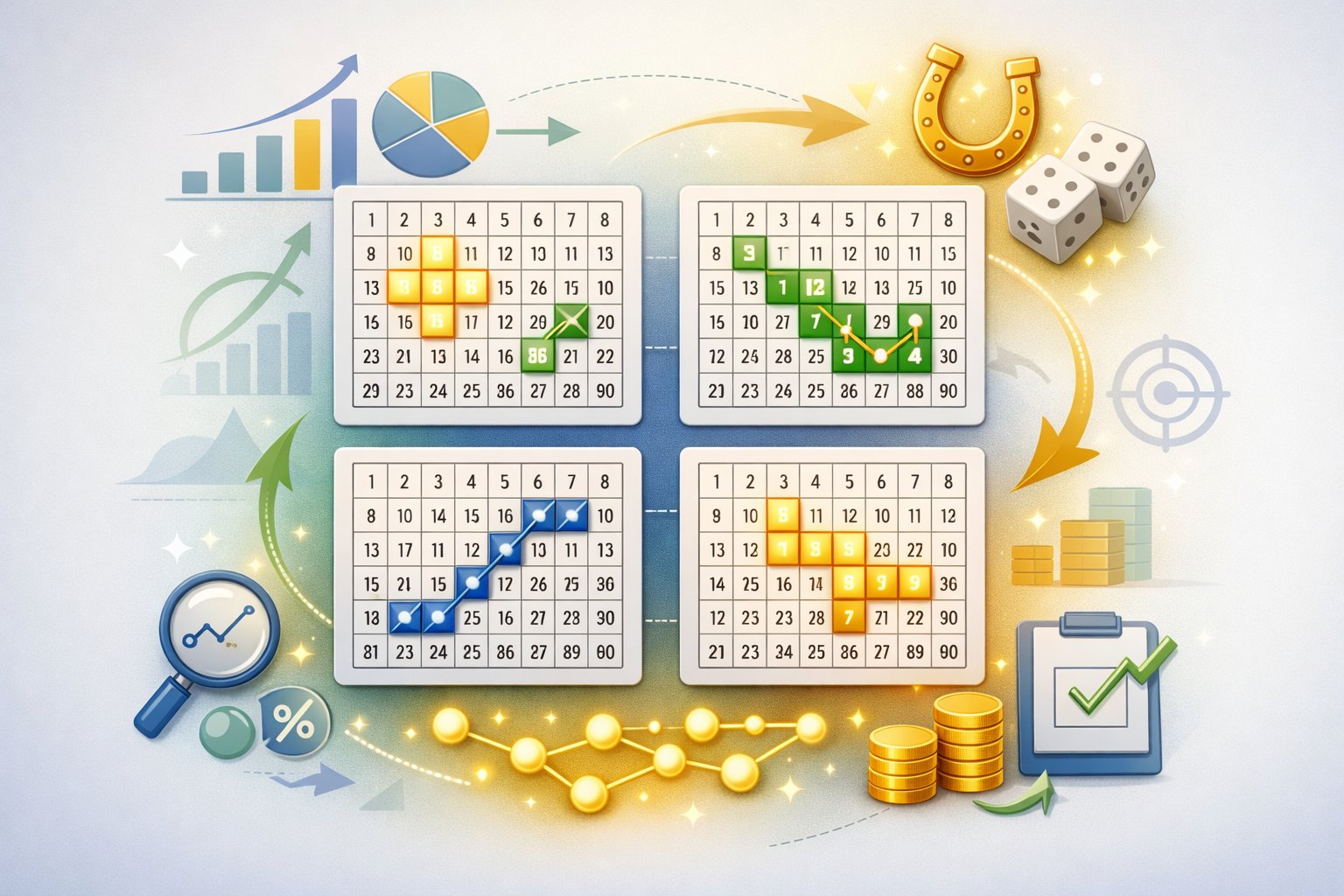
Four card keno lets you play multiple keno cards at once instead of betting on just one ticket. This format gives you more ways to match numbers and win prizes in a single game.
What Sets Four Card Keno Apart
Four card keno allows you to play up to four separate keno cards in the same game. You can choose different numbers on each card or create overlapping patterns across your cards.
The main difference from regular keno is that you’re not limited to one ticket. When the game draws 20 numbers, you have four chances to match your picks instead of one. This means you can win on multiple cards in the same round.
Key features include:
- Playing 2 to 4 cards per game (you don’t have to use all four)
- Selecting 2 to 10 numbers per card
- Creating number overlaps between cards
- Betting as low as one penny per card
The cost per game increases with each card you add. If you play all four cards, you pay four times the base bet amount.
Gameplay Mechanics and Rules
You start by selecting how many cards you want to play, then pick your numbers on each card. The keno board displays numbers 1 through 80 in a grid format.
After you make your selections, the random number generator draws 20 winning keno numbers. Your payout depends on how many numbers you picked and how many match the drawn numbers. Each card is evaluated separately.
The paytable shows what you win based on matches. Catching 3 out of 3 numbers pays more than catching 7 out of 10 because it’s harder to hit all your picks with fewer selections.
You can bet different denominations, but penny and two-penny games typically have lower paytables. Higher denomination games offer better payout ratios for the same number of matches.
Comparing Four Card and 20 Card Keno
Multi-card keno comes in different formats. Four card keno gives you a balanced approach between coverage and cost. 20 card keno lets you play up to 20 tickets at once for maximum board coverage.
With 20 card keno, you can select up to 20 numbers per card and create more complex patterns. The strategy involves reducing larger number combinations into smaller groups spread across more cards. This increases your cost per game significantly.
Four card keno works better for tighter number clusters. You can mark rows, columns, or small groups of numbers across four cards without spending too much. Video keno machines at casinos offer both formats, but four card versions are more common for casual play.
The choice between formats depends on your bankroll. Four cards cost less while still giving you the benefit of overlapping numbers and multiple winning chances.
How to Play 4 Card Keno Effectively

Playing 4 card keno requires understanding the basic mechanics and making smart decisions about your number selections and bet sizes. You’ll manage four separate keno cards at once, which gives you more chances to win on each game draw.
Step-by-Step Guide to Getting Started
You start by selecting numbers on your first keno card. Most 4 card keno games let you pick between 2 and 10 numbers per card, though some machines may have different limits.
After you mark your numbers on the first card, those same numbers copy automatically to all four cards. This is the standard setup for most 4 card keno systems. You can then add more numbers to create overlapping patterns across your cards.
The machine draws 20 numbers randomly from a pool of 80. You win when the drawn numbers match the numbers you picked on any of your cards. Each card plays independently, so you can win on one card, multiple cards, or all four cards in a single game.
You collect your winnings based on how many numbers you caught on each card. The pay table shows exactly what each combination pays before you start playing.
Choosing the Number of Cards and Spots
You should pick between 4 and 8 spots per card when you play multi-card keno. The 7-spot selection offers a good balance between hit frequency and payout potential.
Lower spot selections (2-4 spots) hit more often but pay smaller amounts. Higher spot selections (9-10 spots) pay massive jackpots but hit very rarely. The middle range gives you regular small wins while keeping bigger payouts within reach.
Common spot selection options:
- 4 spots: Hits frequently, lower payouts
- 6-7 spots: Balanced approach, moderate payouts
- 8-9 spots: Less frequent hits, larger payouts
Your keno ticket can use the same spots on all four cards or different combinations. Many players use overlapping patterns where some numbers appear on multiple cards.
Betting Amounts and Ticket Options
You set your bet amount per card, not per game. If you bet $1 per card on 4 card keno, your total wager is $4 per game.
Start with the minimum bet while you learn how to play keno on multiple cards. Most machines accept bets from $0.25 to $5.00 per card. Your total cost multiplies by four since you’re playing four cards simultaneously.
The keno cards on your screen show your active numbers and track hits in real-time. You can play the same ticket for multiple consecutive games by selecting the number of games you want. This locks in your numbers and bet amount for that many draws.
Watch your bankroll carefully since costs add up quickly with four cards in play. A $1 bet per card means you spend $20 for just five games.
Winning Strategies for Four Card Keno
Playing four cards at once opens up strategic possibilities that single-card keno can’t match. Smart number placement across your cards, combined with disciplined betting and systematic approaches, gives you the best framework for consistent play.
Overlapping Number Technique
The overlapping number technique involves selecting certain numbers that appear across multiple cards while keeping other numbers unique to each card. This four card keno strategy spreads your coverage while creating multiple ways to win from the same drawn numbers.
A common approach places 2-3 key numbers on all four cards, then fills the remaining spots with different numbers on each card. If you pick numbers 7 and 23 for all cards, any time these numbers hit, you score on multiple cards simultaneously. The unique numbers on each card provide additional winning opportunities.
This method works well with 6-spot or 7-spot cards. You might place numbers 7, 23, and 45 on all four cards, then add three or four different numbers to complete each card. The overlapping numbers become your anchor points while the varied numbers expand your reach across the board.
Spot Cards and Cluster Bets
Spot cards refer to how many numbers you select on each card, typically ranging from 3-spot to 8-spot configurations. The 3-spot pattern is popular in four card keno because it offers reasonable hit frequency with decent payouts. Many players use a 3-spot overlay pattern where they divide the keno board into sections and pick three numbers from different areas on each card.
Cluster betting groups numbers close together on the board, often in adjacent rows or columns. Some four card keno systems split each card into top and bottom halves, selecting numbers exclusively from one section per card. This creates a structured approach rather than random picks.
The 5-spot and 6-spot cards provide a middle ground between hit frequency and payout potential. While 7-spot and 8-spot cards offer larger payouts, they hit less often and require more patience and bankroll depth.
Consistent Betting Practices
Your betting amount should remain steady based on your total session bankroll. Set a fixed amount per card that represents 1-2% of your total budget. If you have $200 to play, betting $1-2 per card gives you staying power through natural variance.
Avoid increasing bets after losses to chase money back. This leads to faster bankroll depletion. Instead, maintain the same bet level regardless of recent results.
Track your spending per session. Stop when you reach your predetermined loss limit or when you’ve doubled your starting bankroll. These exit points protect your funds and lock in gains when you’re ahead.
Using Keno Charts and Systems
Keno charts display previous draw results, showing which numbers appeared recently. Some players mark “hot” numbers that hit frequently and “cold” numbers that haven’t appeared in many draws. While each draw is random and independent, charts help you make informed choices about number selection.
A structured four card keno system assigns specific number groups to each card. One example: Card 1 gets numbers 1-20, Card 2 gets 21-40, Card 3 gets 41-60, and Card 4 gets 61-80. Another system rotates numbers in mathematical sequences, like adding 7 to each previous number.
You can combine chart analysis with your overlapping technique. Pick one or two hot numbers for all cards, then fill remaining spots with a mix of hot and cold numbers. Document which systems and number combinations work best for you over multiple sessions. This personal data becomes more valuable than any generic keno tips because it reflects your actual results.
Profitable 4 Card Keno Patterns
Patterns help organize your keno numbers across multiple cards to increase coverage and potential wins. Grouping numbers into clusters, lines, or corners makes it easier to track your selections and ensures balanced distribution across the keno board.
Number Clusters and Regions
Dividing the keno board into regions helps you spread numbers across your four cards strategically. Split the board into quadrants or halves, then assign different clusters to each card. For example, place numbers 1-20 on one card, 21-40 on another, and mix ranges on the remaining two.
This approach gives you coverage across different areas of the board. When the draw concentrates in one region, at least one of your cards has a better chance of hitting. You can also create smaller clusters of 5-7 adjacent numbers per card instead of using full quadrants.
Regional patterns work best when you pick 5-6 spots per card. Avoid spreading too thin across the entire board, as this reduces your chances of catching enough numbers on any single card to trigger a payout.
Corner and Line Patterns
Corner patterns focus on numbers at the edges of the keno board, while line patterns follow horizontal or vertical sequences. You might select numbers 1-10 for the top row, 11-20 for the second row, and so on. Corners typically include numbers like 1, 10, 71, and 80.
These patterns create visual organization that makes your number selection easy to remember and track. A diagonal line from 1 to 80 or an X-shape across the board distributes your picks evenly. Some players assign each card one corner or line to maintain clear separation between cards.
Line and corner patterns don’t increase your actual odds since keno draws are random. However, they help you avoid accidentally picking the same numbers twice and ensure balanced coverage across your four cards.
Hot and Cold Numbers
Hot numbers are those drawn frequently in recent games, while cold numbers appear less often. You can track these by watching the keno board display at casinos or using online game histories. Some players build patterns around 5-10 hot numbers, placing them on multiple cards as core selections.
Cold number strategies involve betting on numbers “due” to hit after long absences. Mix 2-3 cold numbers with hot ones on each card to balance your approach. Remember that keno uses random number generators, so past draws don’t affect future results.
Using hot and cold numbers adds a personal strategy element to your game. Track numbers for 20-30 draws before identifying patterns, and update your selections periodically. Combine this method with clustering or line patterns for better card organization.
Advanced Multi-Card Keno Insights
Multi-card keno offers more complexity than single-card games, and understanding the differences between variants, platform-specific adjustments, and paytable variations helps you make better decisions. Online and video keno platforms each have unique features that affect your approach to the game.
Comparing Multi-Card Variants
Four-card keno is the most common multi-card variant, but some casinos offer games with 20 or even 40 cards. The core difference lies in how many simultaneous outcomes you’re tracking and your total bet per game.
In four-card games, you can focus on strategic number selection across a manageable set of cards. Twenty-card keno spreads your numbers much wider, increasing the chance of catching at least some wins but reducing the likelihood of hitting big on multiple cards at once.
The cost structure changes dramatically as card count increases. Playing 20 cards at $0.25 each costs $5 per game compared to $1 for four cards. Your bankroll depletes faster with more cards, even at lower denominations.
Card Count Comparison:
- 4 cards: Best for strategic overlap and tracking
- 10 cards: Moderate coverage with higher costs
- 20 cards: Maximum spread but requires larger bankroll
Adjusting Strategy for Online and Video Keno
Online keno and video keno machines operate differently from live casino games. Video keno in physical casinos uses random number generators that produce results instantly, while keno online platforms may use certified RNG systems with slight variations in pacing.
The speed of play increases significantly on both platforms. Video keno lets you play dozens of games per hour compared to live keno’s slower pace. This means your bankroll can disappear faster if you don’t adjust your bet sizes downward.
Online keno often provides features that live games don’t offer. Auto-play functions, number quick-picks, and saved number combinations make it easier to implement consistent strategies across multiple sessions. Many platforms also display hot and cold number statistics, though these don’t affect true randomness.
The convenience of online platforms means you can compare paytables across multiple casinos quickly. Video keno machines in physical casinos have fixed paytables, but keno online sites may offer different versions of the same game with varying payouts.
Paytable Analysis and Game Selection
Paytables determine your actual returns, and they vary widely between casinos and platforms. A 6-spot game might pay 1,600:1 for catching all numbers at one casino but only 800:1 at another, cutting your potential keno jackpot in half.
Compare the “catch all” payouts and mid-tier catches when evaluating games. A paytable that pays well for catching 5 out of 7 numbers (like 80:1) is more valuable than one paying 40:1, since partial catches happen more frequently than perfect catches.
Key Paytable Elements to Compare:
- Maximum payout for catching all spots
- Mid-tier payouts (catching 60-80% of spots)
- Minimum catch required for any payout
- House edge percentage if disclosed
Some video keno machines and online keno sites display their return-to-player (RTP) percentages. Look for games with RTP above 92%, as anything lower significantly reduces your long-term winning potential. Games with progressive jackpots typically have lower base RTPs but offer larger top prizes.
Check whether the paytable scales linearly with your bet. Some games pay proportionally better at higher denominations, while others maintain the same ratios regardless of bet size.
Expert Tips for Maximizing Winnings
Smart bankroll management keeps you in the game longer, casino bonuses add extra value to your play, and practice builds your confidence before risking real money.
Bankroll Management
Set a clear budget before you start playing keno online and never exceed it. A good rule is to divide your total bankroll by 20 to 30 games to determine your bet per round. For example, with a $100 bankroll, bet $3 to $5 per game across all four cards.
Play lower denominations like $0.25 or $0.50 per card instead of $1. This approach costs you $1 to $2 per round instead of $4, giving you more chances to hit a keno jackpot. More games mean more opportunities to catch winning numbers.
Track your wins and losses during each session. Stop playing when you’ve lost your planned amount or when you’ve won 50% above your starting bankroll. This discipline protects your funds and locks in profits.
Adjust your bet size based on your card strategy. If you’re using the same numbers on all four cards, consider betting less per card since you’re taking higher risk. With different numbers across cards, you can bet slightly more since you’re spreading your coverage.
Leveraging Casino Bonuses
Look for casinos that offer welcome bonuses or reload bonuses that apply to keno games. Many online casinos exclude keno from bonus terms, so read the fine print carefully before claiming any offer.
Free play credits let you test keno tips without risking your own money. Use these credits to try different number selection strategies and spot counts. Some casinos offer cashback on keno losses, which reduces your risk by 5% to 20%.
Join the casino’s loyalty program to earn points on every keno game you play. These points convert to free credits, cashback, or other rewards that stretch your bankroll. VIP programs often provide exclusive bonuses for regular keno players.
Practicing with Free and Real Money Games
Start with free keno games to learn how four-card keno works without any financial pressure. Test all three number selection strategies (same, different, overlapping) to see which one fits your playing style.
Play at least 20 to 30 free rounds with each strategy before switching to real money. Track which spot counts (5, 6, or 7) hit most often in your practice sessions. This data helps you make informed decisions when real money is on the line.
Begin with minimum bets when you move to real money keno. Gradually increase your stakes only after you’ve won consistently for several sessions. This measured approach builds your confidence while limiting potential losses as you refine your keno tips and strategies.
Frequently Asked Questions
Playing 4 Card Keno raises questions about spot selection, number patterns, and how to maximize your chances of winning. Understanding probability and avoiding common errors helps you make smarter choices at the table.
What constitutes an effective 7-spot strategy in 4 Card Keno?
A 7-spot strategy works well when you balance coverage with realistic odds. Catching all 7 spots has odds of roughly 1 in 40,979, which means you should focus on partial catches like 4/7 or 5/7 that pay more frequently.
You can spread your 7 spots across multiple cards using overlapping numbers. Pick 3-4 core numbers that appear on all cards, then add unique numbers to each card to reach 7 spots total. This approach gives you multiple chances to win when those shared numbers hit.
Lower denominations like $0.25 or $0.50 per card let you play more games. With four cards at $0.50 each, you spend $2 per game instead of $4, which extends your playing time significantly.
How do patterns influence winning chances in Keno games?
Patterns don’t change the odds because each draw is random. The machine or system doesn’t remember previous draws or care whether your numbers form a line, cluster, or scattered pattern.
Some players track numbers that appear frequently during their session and use those in overlapping strategies. While this doesn’t improve odds mathematically, it can help you organize your picks and make the game more engaging.
Patterns are best used for convenience and fun rather than as a way to predict outcomes. Choosing numbers in a cluster or line makes them easier to mark quickly on your cards.
What strategies can increase my odds of winning in 4 Card Keno?
Playing 5, 6, or 7 spots gives you the best balance between decent payouts and reasonable odds. These spot counts hit partial matches more often than 8, 9, or 10 spots, which have much longer odds.
You can use three main approaches for number selection. Playing the same numbers on all four cards multiplies your payout when those numbers hit. Playing different numbers on each card increases your coverage and chances that at least one card wins something.
Overlapping numbers combines both benefits by using some shared numbers across cards plus unique numbers. If your core numbers hit, multiple cards win at once. Lower bets and consistent play matter more than any specific number pattern.
What number combinations have proven to be most successful in Keno?
No number combinations win more often than others because keno draws are completely random. Each number has an equal chance of being drawn regardless of past results or patterns.
The numbers 1-80 all have the same probability of appearing in any given draw. Hot and cold number tracking might seem meaningful during a short session, but over thousands of draws, all numbers appear at roughly equal rates.
Your best approach is choosing numbers you can remember and stick with across multiple games. Consistency matters more than which specific numbers you select.
How can one avoid common mistakes when playing 4 Card Keno?
Don’t pick too many spots per card. Playing 9 or 10 spots requires nearly perfect catches to win anything, and the odds are extremely long. Stick to 5-7 spots for more frequent wins.
Avoid betting more than your bankroll allows. Set a budget before you start and divide it by your bet per game to see how many rounds you can play. Playing $1 per card ($4 per game) with a $40 budget gives you only 10 games.
Don’t chase losses by increasing your bets after losing streaks. Each draw is independent, and past results don’t influence future outcomes. Playing at lower denominations consistently gives you more chances to hit a winning combination.
Can you explain the probability of winning in a 4 Card Keno game?
Your odds depend on how many spots you play and how many you need to catch for a payout. Catching 5 out of 5 spots has odds of about 1 in 1,551, while catching 6 out of 6 is roughly 1 in 7,753.
Playing four cards doesn’t change the odds per card, but it gives you four separate chances to win in each game. If you play the same numbers on all cards, your odds of winning on any single card stay the same, but all four cards win together when your numbers hit.
Partial catches pay out more frequently than full catches. For 6 spots, catching 3 or 4 numbers happens much more often than catching all 6. Check your casino’s paytable to see which partial catches qualify for payouts and plan your strategy around those more realistic outcomes.