
Casino playing cards are far more than ordinary decks found in home game nights. These specialized cards are designed to withstand hours of continuous play while maintaining their integrity and preventing cheating attempts. The best casinos worldwide use premium brands like Bicycle, Bee, and Fournier cards that feature enhanced security measures, superior durability, and professional-grade construction.
The differences between casino cards and regular playing cards extend beyond simple durability. Casinos regularly remove cards from circulation to prevent wear patterns that could give players an unfair advantage. These retired decks often become available to the public, offering card enthusiasts a chance to own authentic casino equipment.
Understanding casino playing cards reveals the careful attention casinos pay to every detail of the gaming experience. From the specific materials and coatings used to the security features embedded in each deck, these cards play a crucial role in maintaining fair play. Whether someone is interested in the technical specifications, popular brands used in major casinos, or how to purchase authentic casino cards for personal use, the world of professional gaming cards offers fascinating insights into casino operations.

What Are Casino Playing Cards?
Casino playing cards are specially designed cards built for professional gaming environments. They use advanced materials and security features that make them different from regular store-bought decks.
Definition and Key Features
Casino playing cards are professional-grade cards made from cellulose acetate plastic rather than paper. This plastic material was first used by KEM cards in 1933 and has become the standard for most casinos.
These cards contain camphor during production. This chemical makes the cards more flexible without breaking easily.
The main features include:
- Extreme durability – lasting up to 1,500 shuffles
- Thin, flexible design – usually 12-14 point thickness
- Special security elements – cut corners and borderless backs
- Consistent texture – prevents wear patterns that cheaters could exploit
Most casino playing cards come in poker size dimensions. These measure 2.5 inches wide by 3.5 inches tall. Some table games use bridge size cards at 2.25 inches wide.
Distinction from Standard Playing Cards
Regular playing cards use paper construction and thick cardstock. They typically last only 20 shuffles before showing wear or damage.
Casino playing cards use plastic materials that resist bending and marking. A standard paper deck costs under $5 while casino-grade cards cost $15-25 per deck.
Key differences include:
| Feature | Standard Cards | Casino Cards |
|---|---|---|
| Material | Paper | Plastic |
| Durability | 20 shuffles | 1,000-1,500 shuffles |
| Thickness | 16+ points | 12-14 points |
| Security | None | Cut corners, special printing |
Casino cards have chamfered edges to prevent players from marking them. They also use borderless back designs that stop card crimping tricks.
Importance in Casino Games
Playing cards form the foundation of most casino table games. Cards must maintain perfect condition to ensure fair gameplay and prevent cheating.
Casinos operate 24 hours a day with constant shuffling and dealing. Standard cards would need replacement every few minutes in this environment.
Casino playing cards provide:
- Game integrity – consistent card condition prevents unfair advantages
- Cost efficiency – longer lifespan reduces replacement costs
- Security protection – special features stop common cheating methods
- Dealer comfort – flexible material reduces hand fatigue during long shifts
The advanced materials help casinos maintain proper game standards. Without durable cards, games would face constant interruptions for deck changes.

Types of Casino Playing Cards
Casinos use several distinct types of playing cards that differ from regular home game decks. The main differences include card dimensions, materials used in construction, and the size of printed numbers and symbols.
Poker Size vs. Bridge Size
Poker size cards measure 2.5 inches wide by 3.5 inches tall. Bridge size cards are slightly narrower at 2.25 inches wide by 3.5 inches tall.
Most casinos prefer poker size cards for several key reasons. The wider dimensions make these cards easier for dealers to handle during shuffling and dealing. Players can also see the card indices more clearly across the table.
The extra width helps prevent accidental marking or bending. This is important when cards get heavy use throughout long gaming sessions.
Bridge size cards work better for games where players hold many cards at once. However, most casino games only require players to hold a few cards. This makes poker size the better choice for casino environments.
Materials and Coatings
Casino playing cards come in two main material types. Paper cards use cardstock with plastic coating. Plastic cards are made entirely from synthetic materials.
Paper cards cost less but wear out faster. The plastic coating helps them resist moisture and minor damage. Most budget-conscious casinos use these for regular games.
Plastic cards like KEM brand cost more upfront but last much longer. They resist bending, tearing, and water damage better than paper cards. High-end casinos often choose plastic cards for their durability.
The material affects how cards feel during play. Paper cards shuffle more easily and feel familiar to most players. Plastic cards can feel slippery at first but provide consistent performance over time.
Standard Index vs. Jumbo Index
The index refers to the size of numbers and suit symbols printed in the card corners. Standard index uses smaller print while jumbo index features larger, bolder markings.
Jumbo index cards are preferred in most casino games. The larger numbers and symbols are easier to read from across gaming tables. This reduces mistakes and speeds up gameplay.
Blackjack and baccarat tables almost always use jumbo index cards. The fast pace of these games requires quick card identification. Poker games sometimes use standard index for a more traditional feel.
The bigger symbols also help surveillance cameras capture clear footage. This aids in game monitoring and dispute resolution.
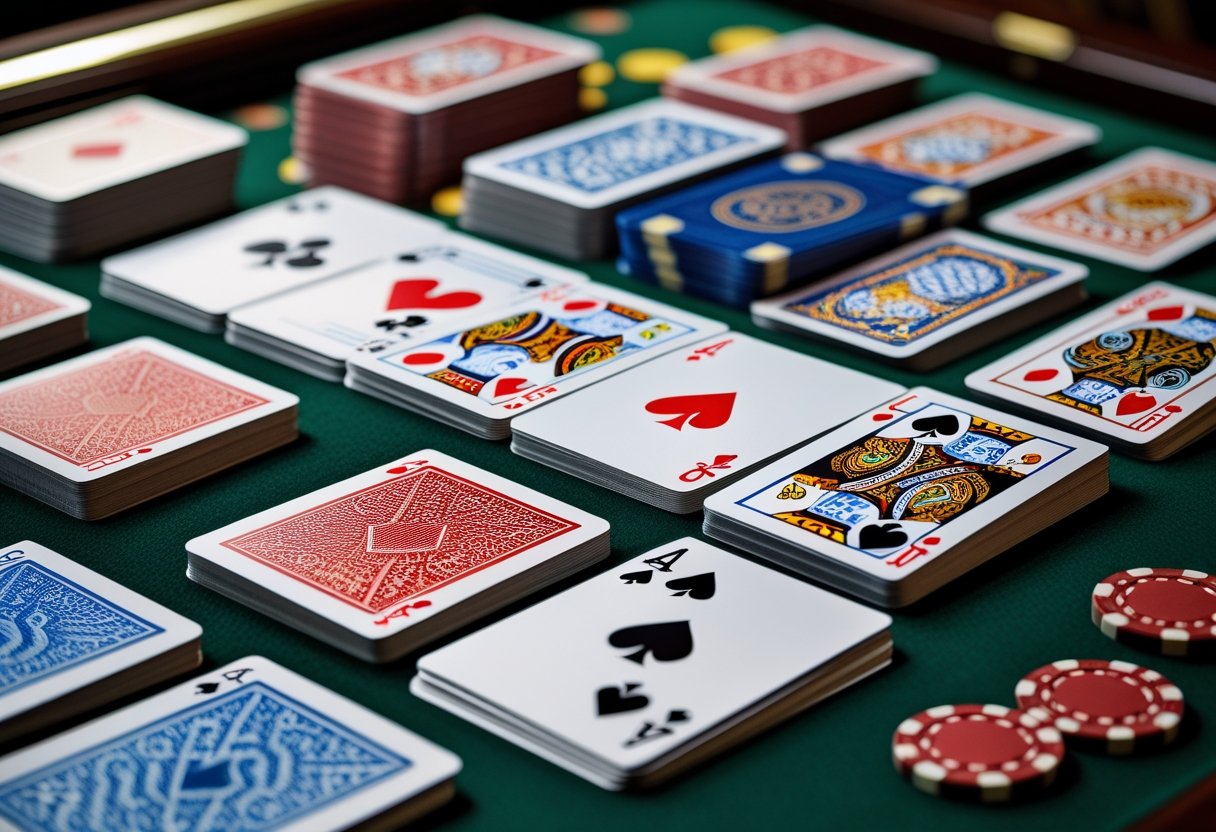
Casino Playing Cards in Popular Games
Different casino games have specific card requirements that affect gameplay and security. Blackjack uses standard poker-size cards with clear number visibility, while baccarat requires cards that can withstand frequent handling and shuffling.
Blackjack Card Specifications
Blackjack tables use poker-size cards measuring 2.5 inches wide by 3.5 inches tall. These dimensions provide optimal handling for both dealers and players during fast-paced gameplay.
The cards feature jumbo index numbers and letters in the corners. This makes card values clearly visible when players hold multiple cards in their hands. Standard index cards are too small for quick identification during gameplay.
KEM plastic cards dominate blackjack tables due to their durability. These cards withstand approximately 1,500 shuffles compared to paper cards that last only 20 shuffles.
Security features include cut corners that prevent players from marking cards. The plastic material also prevents light from passing through, stopping cheaters from seeing card values.
Card thickness ranges from 12-14 points for flexibility. This thin stock allows smooth shuffling and dealing without cards sticking together during rapid gameplay.
Baccarat Card Requirements
Baccarat uses the same poker-size dimensions as blackjack but requires even higher durability standards. The game involves constant card handling and multiple deals per hour.
Cellulose acetate plastic cards are essential for baccarat tables. These cards contain camphor additives that increase flexibility while maintaining structural integrity through thousands of bends.
The cards must have borderless backs to prevent crimping techniques used by cheaters. This design eliminates the ability to create subtle marks along card edges that could identify specific cards.
Baccarat cards undergo frequent replacement every few hours despite their durability. This practice maintains game integrity and prevents any potential marking or wear that could advantage certain players.
Cut card corners and side printing provide additional security layers. These features make it nearly impossible for players to track specific cards through visual identification methods.
Durability and Quality of Casino Playing Cards
Casino playing cards must meet strict quality standards to survive constant use in high-stakes gaming environments. The materials, manufacturing processes, and special features like waterproofing determine how long cards last and how well they perform during gameplay.
Manufacturing Standards
Casino playing cards use premium materials that far exceed regular card quality. Most professional casino cards are made from high-grade plastic or thick plastic-coated paper. This differs greatly from standard household cards that use basic paper construction.
The thickness of casino playing cards typically ranges from 0.3 to 0.4 millimeters. This specific thickness provides the right balance of flexibility and durability. Thinner cards bend too easily and wear out fast. Thicker cards feel clunky and hard to shuffle properly.
Quality control measures include:
- Precise color matching across entire decks
- Uniform card dimensions within 0.1mm tolerance
- Surface texture testing for consistent feel
- Edge finishing to prevent fraying
Premium brands like Bicycle, Bee, and Fournier have built their reputation on meeting these strict manufacturing standards. Their cards undergo multiple quality checks before reaching casinos.
Wear Resistance and Longevity
Playing cards in casinos face extreme wear from constant shuffling, dealing, and handling. A single deck might be used for hundreds of hands per day. Regular paper cards would fall apart within hours under this stress.
High-quality casino playing cards can last 8 to 12 hours of continuous play before showing wear. Some premium plastic cards last even longer. The key factors that affect longevity include surface coating, edge treatment, and core material strength.
Signs of card wear include:
- Bent corners and edges
- Fading colors or markings
- Rough or sticky surfaces
- Visible scratches or marks
Casinos replace cards frequently to maintain game integrity. Even small amounts of wear can create marked cards that skilled players might exploit. This makes durability both a cost factor and security concern.
Waterproof and Washable Options
Many modern casino playing cards feature waterproof construction using 100% plastic materials. These cards resist spills, humidity, and moisture that would destroy paper-based cards instantly.
Plastic casino playing cards can be washed with soap and water when they get dirty. This cleaning ability extends their useful life and maintains a professional appearance. The cards dry quickly without warping or losing their shape.
Benefits of waterproof cards:
- Easy cleanup of spills and stains
- Resistance to humidity damage
- Longer replacement cycles
- Better hygiene for players
The smooth plastic surface also provides consistent dealing and shuffling performance. Cards glide smoothly without sticking together or creating friction that slows down gameplay.
Customization and Branding in Casino Playing Cards
Casino playing cards serve as powerful branding tools while maintaining strict security standards. Custom designs allow casinos to showcase their identity through unique logos and colors, while specialized security features prevent counterfeiting and cheating.
Custom Designs and Logos
Casinos use custom playing cards to strengthen their brand identity and create memorable experiences for guests. These cards feature the casino’s logo, colors, and unique design elements on the back while keeping standard faces on the front.
Custom casino playing cards are printed on premium linen cardstock with professional-grade quality. The cards maintain casino standards with 310gsm weight and black core centers that prevent light from passing through.
Many casinos order custom decks for special events, tournaments, and promotional giveaways. The minimum order is typically 25 decks, making customization accessible for smaller venues.
Popular customization options include:
- Full-color logo printing
- Custom color schemes
- Special event designs
- Marketing messages
- Anniversary editions
Each deck comes individually packaged in custom tuck boxes with clear windows to display the branded backs.
Security Features
Casino playing cards include multiple security features to prevent fraud and maintain game integrity. The most important feature is the black core center that makes cards completely opaque, even under bright lights.
Linen finish cards represent the industry standard for professional casino use. This textured surface provides better grip and handling while hiding minor wear patterns that could give players unfair advantages.
Professional casino cards use specific paper weights and coatings that ensure consistent performance. The 310gsm weight provides durability without being too thick to handle properly.
Key security elements:
- Black core construction
- Standardized dimensions
- Quality control testing
- Consistent printing alignment
- Tamper-evident packaging
These features help casinos maintain fair games while protecting against marked cards and other cheating methods.
Brand Variations (Bee, Aristocrat, Gemaco, Aviator)
Major playing card manufacturers produce specialized casino lines with distinct characteristics. Bee cards feature diamond-back patterns and are widely used in casinos worldwide for their durability and professional feel.
Aristocrat cards offer premium quality with smooth finishes and precise cutting. These cards are popular in high-stakes games where consistent performance is critical.
Gemaco specializes in casino-grade cards with enhanced security features. Their cards often include custom security printing and specialized coatings for extended use.
Aviator cards provide reliable performance at competitive prices. Many smaller casinos choose these cards for regular table games and tournaments.
Each brand offers customization options while maintaining their signature quality standards and security features.
Purchasing and Collecting Casino Playing Cards
Casino playing cards can be bought new from specialty retailers or found used from actual casinos. Collectors should consider card quality, brand reputation, and authenticity when making purchases.
Where to Buy New Casino Playing Cards
Professional playing card retailers offer the widest selection of casino-quality cards. American Gaming Supply stocks cards from top brands like Bicycle, COPAG, KEM, and Royal. These retailers specialize in casino equipment and carry authentic brands used in real casinos.
Online marketplaces like eBay provide access to collectible casino cards from various sellers. These platforms offer both new and vintage options for collectors seeking specific designs or casino brands.
Local game stores and casino supply shops may carry limited selections. These stores often focus on popular brands and standard designs rather than specialty or collectible options.
Popular Casino Card Brands:
- Bicycle
- COPAG
- KEM
- A-Plus
- Royal
- WPT
Used Casino Playing Cards for Sale
Authentic used casino playing cards come directly from real casinos after being retired from gaming floors. These cards have seen actual casino action, making them appealing to collectors and casual players alike.
DiscountCasinoGear.com specializes in genuine used casino cards. The cards are played with in casinos for a period, then repackaged and sold to consumers. This process ensures authenticity while providing affordable access to real casino cards.
Las Vegas casino cards are particularly popular among collectors. Decks from famous casinos like Caesar’s Palace offer a piece of gaming history. These cards often come in bundle packages containing multiple decks from different casinos.
Used casino cards work well for home games, parties, and bar leagues. They provide authentic casino quality at lower prices than new professional decks.
Factors to Consider When Buying
Card quality determines longevity and performance. Premium casino cards resist wear and maintain their original feel through many games. They provide consistent shuffling and dealing without warping or fading.
Brand reputation matters for serious players and collectors. Established brands like COPAG and KEM are trusted by professional casinos worldwide. These brands use superior materials and manufacturing processes.
Authenticity is crucial for collectors seeking genuine casino cards. Real casino cards often have specific markings, hole punches, or corner cuts that casinos use when retiring decks. These marks prove the cards were actually used in a casino setting.
Intended use affects the best choice. Magic tricks, cardistry, and casual games have different requirements than serious poker play or collecting.
Frequently Asked Questions
Casino playing cards have specific features that set them apart from regular decks. Players often wonder about the quality, durability, and security features of these cards, as well as where to buy authentic casino cards.
What are the characteristics of playing cards used in casinos?
Casino playing cards have several key features that make them different from regular cards. They use special security features like UV ink and unique patterns to prevent counterfeiting and cheating.
Most casinos use poker-size cards instead of bridge-size cards. Poker-size cards are easier for dealers and players to handle during fast games.
Many casino cards have jumbo-index numbers and symbols. These larger markings make the cards easier to read from across the table, especially in crowded games like blackjack.
Casino cards are made from high-quality materials. Many use plastic construction or special paper coatings that resist bending and marking better than regular cards.
The backs of casino cards feature complex designs and patterns. These intricate patterns make it harder for someone to mark the cards without being detected.
Where can one purchase authentic casino playing cards?
Casino gift shops sell used playing cards that were actually used on gaming tables. These cards are authentic casino cards that have been taken out of rotation.
Online retailers also sell new casino-quality cards from brands like Bicycle, Bee, and KEM. These are the same brands and types that casinos use in their games.
Specialty card shops often carry casino-grade playing cards. They stock brands like Fournier and other professional-quality decks used in casinos.
Used casino cards are marked or cancelled before being sold. Casinos drill holes or cut corners to prevent these cards from being brought back to gaming tables.
What is the difference between Bee playing cards and other casino card brands?
Bee cards are made by The United States Playing Card Company and are popular in many casinos. They have a simple design and are known for their durability under heavy use.
Bicycle cards are more common for home games but can sometimes be found in casinos. They have different back designs compared to Bee cards.
KEM cards are made from 100% plastic and cost more than paper cards. They last much longer and resist bending and water damage better than other brands.
Fournier cards are another plastic option that many casinos choose. They offer superior durability compared to paper-based cards like Bee or Bicycle.
The choice between brands depends on cost, durability needs, and player preferences. Some casinos test different brands to see which ones hold up best.
How do casinos determine the lifecycle of a deck of cards?
Casinos replace decks based on wear and tear rather than a fixed schedule. Cards that become bent, marked, or damaged are removed from play immediately.
Game type affects how often decks are changed. Blackjack tables might change decks more frequently than poker games due to card counting concerns.
Busy tables see more deck changes than quiet ones. High-volume games cause more wear on the cards from constant shuffling and dealing.
Each casino sets its own policies for deck replacement. Some change decks multiple times per shift while others use them for several hours.
Regular inspections help identify when cards need replacement. Casino staff check for signs of wear, marking, or any damage that could affect game integrity.
What are the benefits of using a player card at casinos?
Player cards track gambling activity and reward frequent players with points. These points can be redeemed for free slot play, food, or merchandise.
Slot machines typically award one point for every $2 played. Video poker machines usually require $7 of play to earn one point.
Every 100 points can often be redeemed for $1 in credits. This gives players value back for their gambling spending.
Live poker games award points at different rates. Players typically earn 150 points per rated hour of play at poker tables.
Player cards also provide access to special promotions and discounts. Casinos use these cards to track preferences and offer personalized rewards.
How to identify if a deck of cards was actually used in a casino?
Authentic used casino cards have cancellation marks to prevent reuse. Casinos drill holes through the deck or cut off corners before selling them.
The cards will show signs of actual use from casino play. Look for slight wear patterns, especially on frequently handled cards like aces and face cards.
Casino cards often have the casino’s name or logo printed on them. This branding helps identify where the cards were actually used.
Used casino cards come sealed in plastic wrap with casino branding. The packaging typically identifies the specific casino where the cards were used.
The card quality will be higher than regular store-bought decks. Casino cards use better materials and construction methods than typical playing cards.