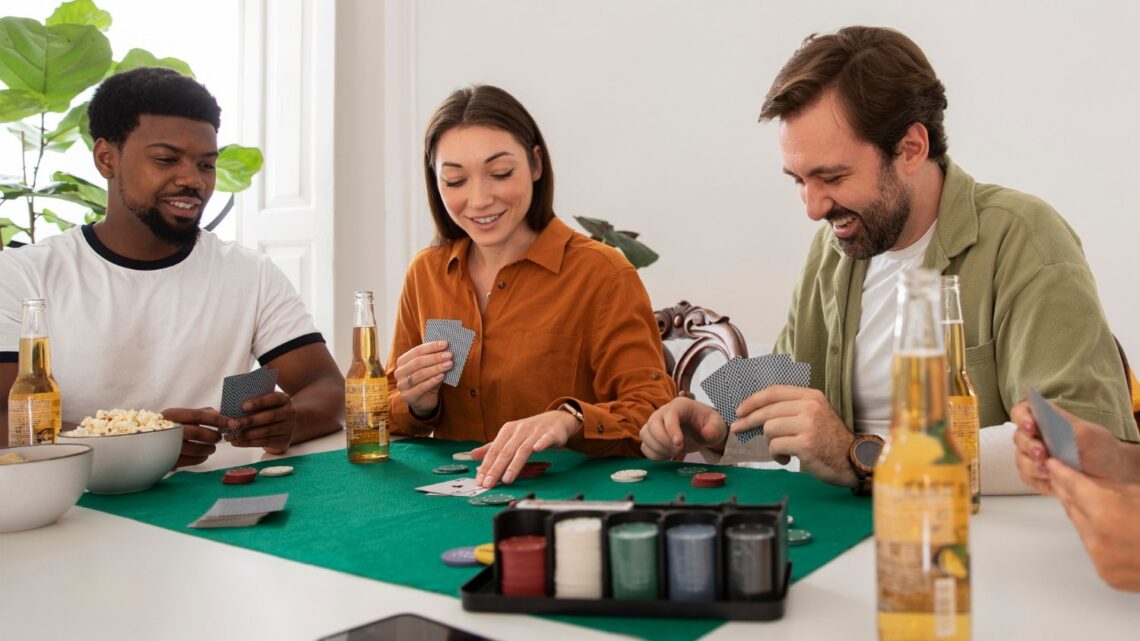
Playing poker at home brings the excitement of casino-style gaming straight to your living room. You don’t need fancy equipment or professional dealers to host a great game with friends and family. With basic supplies like cards, chips, and a table, plus some planning around rules and structure, you can create an enjoyable poker night that keeps players coming back for more.

The key to a successful home game lies in proper preparation. You need to decide on important details like whether to run a cash game or tournament, what stakes to play, and which poker variant works best for your group. Setting clear expectations before anyone sits down helps everything run smoothly and prevents confusion or disagreements during play.
This guide covers everything you need to know to set up and run your own poker games at home. You’ll learn about selecting the right equipment, structuring your game properly, creating the right atmosphere, and managing all the logistics that make for a fun and fair poker night.
Essential Equipment and Setup
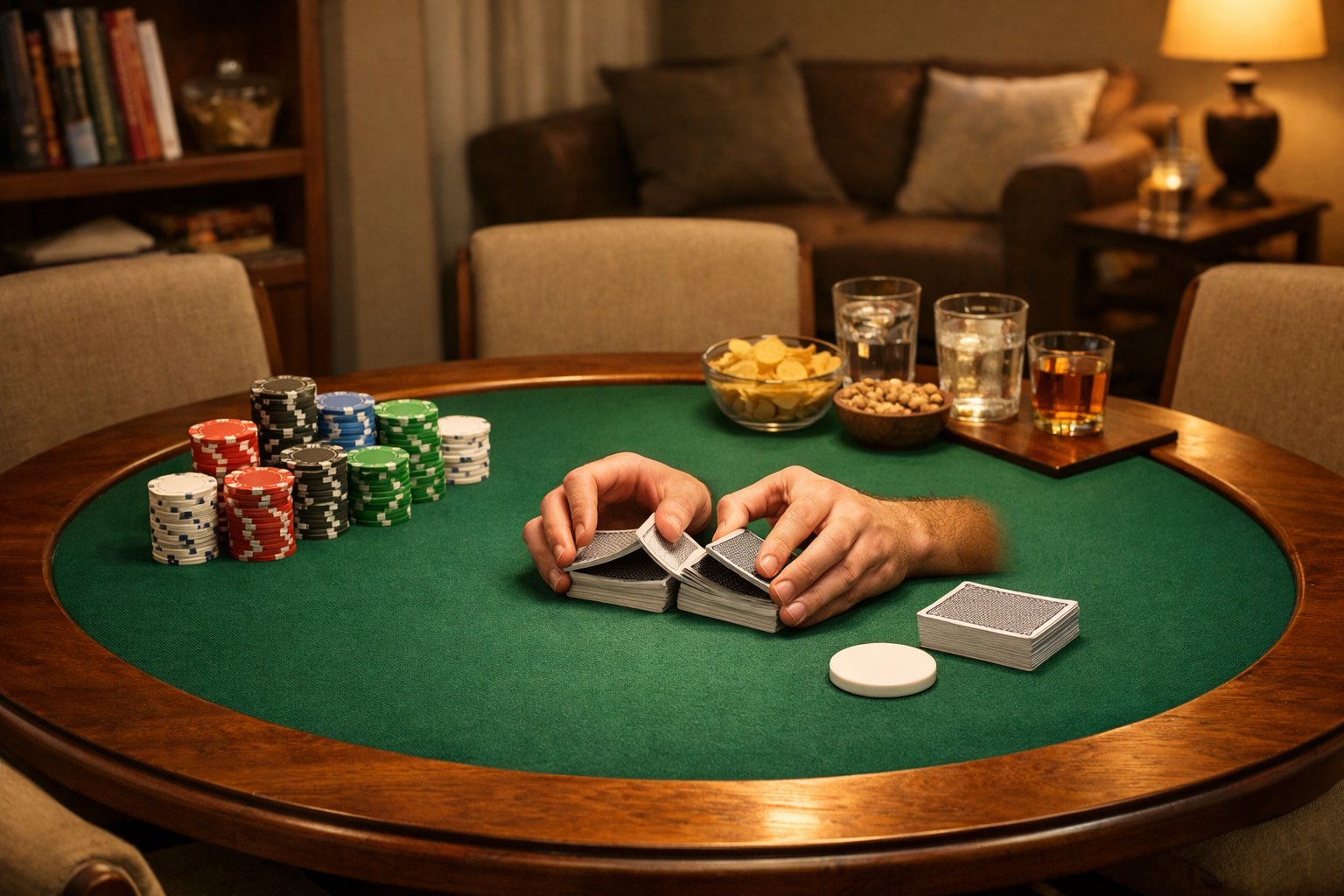
You need a few key items to run a proper poker game at home. The right table or playing surface, a solid poker chip set, and quality playing cards make the difference between a casual game and something that feels legitimate.
Selecting a Poker Table or Playing Surface
A dedicated poker table makes your game feel more professional, but you don’t need to spend a fortune. Oval tables that seat 8-10 players work best for most home games.
Look for tables with padded rails and cup holders. The padding gives your arms a comfortable place to rest during long sessions, and cup holders prevent spilled drinks from ruining your chips or cards.
Fold-up poker tables with speed cloth run about $150-300 and store easily when not in use. If you’re serious about hosting regular games, custom tables with built-in chip trays and leather rails cost $500-1500 but provide a casino-quality experience.
A large dining table works fine if you’re just starting out. You can buy a poker table topper for $50-150 that adds padding and a felt surface. Make sure whatever surface you use has enough space for each player’s chips and cards without crowding.
Choosing a Poker Chip Set
Your poker chips set defines how the game feels in your hands. Clay chips weigh 9-13.5 grams and have that satisfying clack when you stack them, but they cost $0.50-$2 per chip.
Composite chips offer good value at around $30 for a 300-piece set. They still have decent weight and durability without the high price tag.
For most home games with 6-8 players, you need at least 300 chips in these denominations:
- 100 white chips ($1)
- 75 red chips ($5)
- 50 green chips ($25)
- 25 black chips ($100)
Store your poker chips in cases or trays between games to keep them organized and protected. During play, encourage players to stack their chips neatly so everyone can see approximate stack sizes.
Decks of Playing Cards and Dealer Button
Use 100% plastic playing cards instead of paper ones. Plastic decks cost $4-15 each but resist bending and water damage. They last through dozens of games while paper cards wear out quickly.
Keep at least two deck of cards ready. While one dealer shuffles, the other deck stays in play so there’s no waiting between hands.
Your dealer button marks who deals each hand and determines blind positions. You can buy a basic dealer button for a few dollars, or get a set that includes small blind and big blind buttons to eliminate confusion.
A cut card prevents the bottom card from showing during deals. Card shufflers speed up the game if your group doesn’t enjoy shuffling, though many players prefer the traditional feel of hand shuffling.
Game Formats: Cash Games and Tournaments

Home poker games split into two main formats: cash games where chips equal real money, and tournaments where players compete for set prize pools. Each format requires different setup steps and offers unique advantages for home play.
Overview of Home Poker Game Formats
Cash games let you buy in for a set amount, with each chip representing actual money value. You can leave whenever you want and cash out your chips for their dollar value. If you lose your stack, you can usually rebuy more chips with additional money.
Tournaments work differently. Everyone pays the same buy-in and receives an equal starting stack. Once you lose all your chips, you’re out of the game. The last players standing split the prize pool based on finishing positions.
The choice between formats depends on your group’s preferences. Cash games offer flexibility for players who want to join late or leave early. Tournaments create more excitement with elimination pressure and a clear winner at the end.
Setting Up a Cash Game
Choose your stakes first by setting the small and big blind values. Common home game blinds are $0.25/$0.50 or $0.50/$1.00. Players typically buy in for 50-100 times the big blind amount.
Assign chip colors to dollar values before starting. A standard setup uses white chips for $0.25, red for $1.00, and blue for $5.00. Make sure you have enough chips for all players to buy in comfortably.
Key cash game decisions:
- Minimum and maximum buy-in amounts
- Whether players can add chips to their stack during play
- Whether blinds stay fixed or increase over time
- Rules for leaving the game and cashing out
Keep the buy-ins on hand to pay players when they cash out. Track all money coming in and going out to ensure the totals match at the end of the night.
Setting Up a Home Poker Tournament
Set your buy-in amount and total starting chips for each player. A typical structure gives players 100-200 big blinds to start, such as 5,000 chips with 25/50 blinds.
Create a blind schedule that increases every 15-20 minutes. Write down each level’s blind values before starting so players know what to expect. The blinds should roughly double each time they increase.
Tournament structure checklist:
- Buy-in amount and starting chip count
- Blind level duration (15-20 minutes recommended)
- Blind increase schedule
- Rebuy rules (if allowed) and cutoff time
- Payout structure for top finishers
Decide your prize distribution before cards are dealt. Most home poker tournaments pay the top 2-3 finishers. A common split awards 60% to first place, 30% to second, and 10% to third.
Planning Structure and Rules
Setting up your home poker game requires three key decisions: how much players pay to enter, how the blinds increase during play, and how you’ll split the prize money. These choices shape the entire experience and determine whether your tournament lasts one hour or five.
Buy-Ins and Starting Stacks
The buy-in amount should fit your group’s budget. A $20-$50 buy-in works well for casual games, while serious players might prefer $100 or more.
Your starting stack doesn’t need to match the buy-in amount. If players pay $50, you can give them 1,500 chips or 5,000 chips—it makes no difference to the prize pool. What matters is giving everyone the same amount.
A good rule is to provide starting stacks worth 30-50 big blinds. If your first big blind is 50 chips, give players 1,500-2,500 chips to start. This gives everyone room to play poker instead of just pushing all-in every hand.
Make sure you have enough physical chips for everyone. Calculate your total chips needed by multiplying the starting stack by the number of players, then add extra for any rebuys you plan to allow.
Blinds and Blind Structure
Blinds force action and prevent players from sitting back forever. Set blind levels to increase every 6-12 minutes depending on how long you want your game to run.
Start with small blinds like 25/50 or 50/100. Each level should increase by about 50-100% of the previous level. Avoid doubling blinds every single level or players will go broke too fast.
Here’s a simple structure for a 2-3 hour game with 1,500 starting chips:
| Level | Small Blind | Big Blind | Time |
|---|---|---|---|
| 1 | 25 | 50 | 8 min |
| 2 | 50 | 100 | 8 min |
| 3 | 75 | 150 | 8 min |
| 4 | 100 | 200 | 8 min |
| 5 | 200 | 400 | 8 min |
| 6 | 500 | 1,000 | 8 min |
Use a timer to track each level. Write your blind structure on a whiteboard or print it out so everyone can see when increases happen.
Payout and Re-buy Options
The payout structure determines how you split the prize pool. The standard 50/30/20 split gives first place 50% of the pool, second place gets 30%, and third place takes 20%. This rewards the winner while still paying the top three finishers.
For smaller games with 6 or fewer players, consider paying just first and second place at 65/35 or going winner-takes-all. Games with 10+ players can pay four spots using 40/30/20/10.
Rebuys let busted players buy back in, which grows the prize pool but extends game length. Limit rebuys to one per player during the first 2-3 blind levels only. Each rebuy costs the same as the original buy-in and adds that amount to the prize pool.
Skip the rake for home games. Taking a percentage off the top creates legal issues and annoys your friends. The host shouldn’t profit from running the game.
Selecting Poker Variants for Home Play
Different poker games work better for different groups, and picking the right variant depends on your players’ skill levels and what kind of action they prefer. Texas Hold’em remains the most popular choice, but games like Omaha, Seven-Card Stud, and Five-Card Draw each bring unique strategies and betting styles to your home game.
Texas Hold’em and How to Play Poker
Texas Hold’em is the best starting point for any home poker game. Each player receives two cards face-down, and five community cards are dealt in the center of the table in three stages: the flop (three cards), the turn (one card), and the river (one card).
Players make their best five-card hand using any combination of their two hole cards and the five community cards. The game starts with two players posting forced bets called blinds.
A round of betting happens before the flop, after the flop, after the turn, and after the river. You can play Texas Hold’em as no-limit (bet any amount), pot-limit (bet up to the pot size), or fixed-limit (set bet amounts).
No-limit Texas Hold’em creates the most dramatic moments because players can bet all their chips at any time. This variant is easy to learn but takes years to master, which makes it perfect for both new and experienced players at your home game.
Omaha and Seven-Card Stud
Omaha follows a similar structure to Texas Hold’em but deals four hole cards instead of two. You must use exactly two of your hole cards and three community cards to make your hand. This rule confuses many new players, so you need to check hands carefully at showdown.
Pot-limit Omaha creates more action than Hold’em because players can make stronger hands more often. Omaha Hi-Lo splits the pot between the best high hand and the best low hand when three cards eight or lower appear on the board.
Seven-Card Stud works completely differently from Hold’em and Omaha. Players receive two cards face-down and one face-up to start. Four more cards are dealt one at a time (three face-up, one face-down), with betting rounds after each card.
Stud has no community cards and uses antes plus a bring-in bet instead of blinds. The player showing the lowest card pays the bring-in on third street.
Five-Card Draw and Other Variations
Five-Card Draw is the simplest poker variant and the game many people learned as kids. Each player gets five cards face-down, and a betting round happens before players can discard and replace cards they don’t want.
After the draw, a final betting round occurs and remaining players show their hands. You can play draw poker with antes only or with blinds like Hold’em.
Other popular home game variants include:
- Razz – Seven-Card Stud where the lowest hand wins
- Badugi – Four-card draw game where you want the lowest hand with four different suits
- Pineapple – Like Hold’em but you get three hole cards and discard one
- Three-Card Guts – Quick game where players decide if they’re “in” or “out” with just three cards
Mixed games rotate through multiple variants each orbit or after a set time period. This format keeps experienced players engaged and prevents the game from getting stale. Start with easier variants before adding complex games like Badugi or Razz to your rotation.
Hosting Guidelines and Atmosphere
A successful poker home game needs proper space preparation, good food and drinks, and the right tools to manage gameplay. These elements work together to keep players comfortable and the game running smoothly.
Preparing the Poker Space
Your poker space needs enough room for all players to sit comfortably without bumping elbows. Set up your table in an area with good lighting so players can easily see their cards and the board. Position overhead lights or lamps to eliminate shadows on the table surface.
Arrange seating so each player has clear sight lines to the pot and all other players. Make sure chairs are comfortable since your game may run several hours. Keep the temperature at a comfortable level and ensure proper ventilation.
Place trash bins within easy reach to keep the playing area clean. Set up a side table or counter space away from the poker table for food and drinks to prevent spills on your playing surface. Store extra cards, chips, and supplies nearby but out of the way.
Snacks, Drinks, and Ambience
Offer snacks that won’t make hands greasy or messy. Pretzels, nuts, and wrapped candy work well because they don’t leave residue on cards. Pizza is a popular choice for hot food since it’s affordable and easy to serve. You can also order catering from local restaurants for larger groups.
Stock both alcoholic and non-alcoholic drink options to accommodate all players. Beer and soft drinks are standard choices, but keep water available too. Place drinks in holders or on coasters away from the cards and chips.
Set up a separate area for food service so players can grab snacks between hands without disrupting play. Avoid chips or other foods that leave powder or grease on fingers.
Using Tournament Apps and Timers
Tournament apps help you track blind levels, payouts, and chip counts for poker home games. Apps like Poker Timer or Blinds Up allow you to set custom blind structures and automatic level increases. These tools eliminate disputes about when to raise blinds.
Set your blind levels before the tournament starts. Five-minute levels create faster games while 15-30 minute levels allow for deeper play. Display the timer on a phone or tablet where all players can see it.
Many tournament apps calculate payouts automatically based on the number of players and prize pool. This saves time and prevents math errors. Some apps also track player statistics across multiple sessions if you run regular poker home games.
Poker House Rules and Etiquette
Setting clear rules and expected behavior before your game starts prevents confusion and keeps everyone happy. Good etiquette ensures players respect each other and the game runs smoothly.
Establishing House Rules
You need to decide on specific rules before anyone sits down to play. Start with the basics like betting structure, whether players can rebuy, and what happens if someone accidentally exposes a card.
Write down your rules and share them with players before the game. Common house rules include whether string bets are allowed, if players can check in the dark, and how much time someone has to act. You should also clarify if cell phones are permitted at the table and whether players can discuss hands in progress.
Set rules about money too. Decide if players can add chips between hands in cash games or if they must wait until they bust in tournaments. Make clear whether IOUs are acceptable or if it’s cash only.
Some groups ban certain behaviors like slow rolling or excessive celebration. Whatever you choose, make sure everyone agrees to the rules before the first hand is dealt.
Poker Etiquette at Home
Players should act in turn and avoid discussing their cards while a hand is still going. When you fold, place your cards face down and don’t reveal what you had until the hand ends.
Keep your chips visible and organized so other players can estimate your stack size. Don’t splash the pot by throwing chips into the middle. Instead, place bets in front of you for the dealer to pull in.
Respect other players by avoiding constant complaints or criticism of how others play. If someone makes a mistake, handle it calmly rather than getting angry. Stay off your phone during hands you’re involved in.
Clean up after yourself and avoid messy snacks that get grease on the cards. Thank your host and offer to help with setup or cleanup.
Gameplay Basics and Strategy
Understanding how to properly shuffle and deal, knowing which hands beat which, and applying basic strategy will make your home games run smoothly and help everyone play better poker.
Shuffling and Dealing Cards
Shuffle the deck at least seven times to properly randomize the cards. This prevents players from tracking cards or gaining unfair information from previous hands.
The dealer position rotates clockwise after each hand. Use a dealer button to mark who deals and to determine betting order. In Texas Hold’em, deal two cards face down to each player, starting with the player to the dealer’s left and moving clockwise.
After the first betting round, deal three community cards face up (the flop). Deal one more card after the next betting round (the turn), then a final card (the river). Burn one card by placing it face down in the muck before dealing the flop, turn, and river to prevent cheating.
Hand Rankings and Common Trouble Spots
Standard poker hand rankings from highest to lowest:
- Royal Flush
- Straight Flush
- Four of a Kind
- Full House (three of a kind plus a pair)
- Flush
- Straight
- Three of a Kind
- Two Pair
- One Pair
- High Card
New players often confuse a flush with a straight. A flush requires five cards of the same suit in any order. A straight needs five cards in sequence but can mix suits.
Another common mistake is thinking two pair beats three of a kind. Three of a kind always wins. Players also overvalue their pocket aces when the board shows scary cards. Even the best starting hand can lose to a full house or flush.
Basic Poker Strategy for Home Games
Play tight early in tournaments when blinds are small. Focus on strong starting hands like pocket pairs, ace-king, and suited connectors like 10-9 of hearts. Suited connectors can make straights and flushes but play them carefully.
Position matters more than most beginners realize. Acting last gives you information about what other players do before you decide. Play more hands from late position and fewer from early position.
Bet when you have strong hands to build the pot. Don’t slow-play too often in home games because players call more frequently than they should. Fold weak hands without regret, especially when facing raises from tight players who rarely bluff.
Managing Chips and Chip Distribution
Proper chip management keeps your poker game organized and betting clear for all players. The right distribution at the start and during play prevents confusion and maintains a smooth pace throughout the game.
Effective Poker Chip Distribution
Start by determining your buy-in amount and blind structure before distributing chips. For a cash game with $1/$2 blinds and a $100 buy-in, give each player 20 white chips ($1), 17 red chips ($5), and 4 green chips ($25). This poker chip distribution provides flexibility for different bet sizes without requiring constant chip exchanges.
For tournaments with 1,000 starting chips, distribute 10 chips worth 5, 8 chips worth 25, 8 chips worth 100, and 4 chips worth 500. Keep denominations consistent across all players to maintain fairness.
Use standard chip colors when possible. White typically represents the lowest value, followed by red, green, black, and purple for higher amounts. Clearly announce chip values before the game starts to prevent confusion during betting rounds.
Managing Chip Stacks During Play
Assign one person as the banker to handle all chip exchanges and track buy-ins throughout the game. Keep bank chips separate from those in play to avoid mixing totals. Record each transaction on a notepad or tracking app.
As blinds increase in tournaments, exchange lower denomination chips for higher values through a process called “coloring up.” This reduces chip stack clutter and simplifies betting. Remove the smallest chips from play once they no longer match blind levels.
Monitor chip stacks to ensure players have enough small denominations for blinds and standard bets. Make change available when needed to prevent delays. Players should keep their chip stacks visible and organized by denomination so others can estimate bet sizes accurately.
Frequently Asked Questions
Understanding the basics and logistics of hosting poker at home helps create smooth, enjoyable games for everyone involved. These questions cover everything from fundamental rules to practical setup concerns.
What are the basic rules I should know before hosting a poker game at home?
Texas Hold’em is the most popular poker variation for home games. Each player receives two private cards, and five community cards are dealt face-up on the table. Players make the best five-card hand using any combination of their private cards and the community cards.
Betting happens in four rounds: before the flop, after the flop (first three community cards), after the turn (fourth community card), and after the river (fifth community card). Players can check, bet, call, raise, or fold during each round.
The game moves clockwise around the table. The dealer button rotates each hand to show who acts last. The two players to the dealer’s left post the small blind and big blind to start the betting.
How can I organize a poker night with friends that’s enjoyable for everyone?
Invite 8-10 players for a single table tournament. This number keeps the game moving without requiring multiple tables or excessive chips.
Choose players with similar experience levels so nobody feels outmatched. Set buy-ins at an amount everyone can comfortably afford. Make sure all players know the stakes and rules before the game starts.
Create a friendly atmosphere by focusing on the social aspect. Provide snacks and drinks. Keep your phone off the table during hands and encourage others to do the same.
Are there any legal considerations when playing poker for money in a private residence?
Laws about home poker games vary by location. Most areas allow private games where the host doesn’t take a cut of the pot or charge fees beyond the buy-in.
Check your local and state laws before hosting games for money. Some jurisdictions restrict the stakes or frequency of games. Others require specific conditions about who can participate.
Keeping games private and among friends typically avoids legal issues. Don’t advertise your game publicly or allow strangers to join for money.
What equipment is essential for a home poker game, and what can be used as alternatives to traditional items?
You need a deck of cards at minimum. Plastic laminated cards work better than paper ones because they don’t crease and are easy to clean.
A flat table big enough for all players is necessary. A dining table works fine for most home games. You can add a felt surface to help cards slide smoothly.
Poker chips make tracking bets easier, but you can use cash for small cash games. A 500-chip set typically provides enough for a single table tournament. You can also use coins, beans, or other small items to represent chip values.
A timer helps track blind levels. Your smartphone’s stopwatch or alarm function works perfectly for this purpose.
Can you suggest some tips for beginners to improve their poker playing skills at home games?
Start by learning hand rankings thoroughly. Know which hands beat others without needing to check a reference chart.
Pay attention to your position at the table. You have an advantage when acting later in the betting round because you see what other players do first.
Watch how other players bet and look for patterns. Some players bet more when they have strong hands, while others bluff frequently.
Play tight as a beginner by only entering pots with strong starting hands. Fold more often than you play until you understand the game better. Practice reading the board to see what possible hands could beat yours.
What’s the best way to set up a functional and fair chip system when playing poker without actual casino chips?
Assign specific values to whatever items you use as chips. Write down the values so everyone can reference them during the game.
Give each player the same starting amount, typically 50-100 times the big blind. For example, if the big blind is 50, each player starts with 2,500 to 5,000 in chips.
Use different colors or sizes to represent different values. Make sure you have enough of each denomination so players don’t constantly need to make change.
Create a simple conversion system if using coins or other household items. Pennies could represent 25, nickels represent 100, dimes represent 500, and quarters represent 1,000.